
Introduction
You launched a bold strategy, hired the right vendors, and set ambitious KPIs — but months later, results lag, and stakeholders are frustrated. It’s a familiar story for growing organizations.
This isn’t always a strategy problem. It’s execution debt: the accumulated gap between strategic intent and the operational capability to deliver it. And for organizations using remote staffing, that gap can grow quickly unless teams, SOPs, and KPIs are aligned from day one.
According to McKinsey, poor execution is a major reason why about 70% of large-scale transformation initiatives fall short of their objectives. Execution debt increases when remote staffing is used because of handoff friction, unrecorded procedures, and inadequate ramp plans for offshore hires.
What Execution Debt Looks Like
Execution debt shows up in ways that are easy to recognize but difficult to diagnose:
- Missed deadlines on key initiatives
- Inconsistent outputs across teams or vendors
- Repeated rework due to unclear expectations
- Slow progress on high-priority projects
Example: A remote worker in the Philippines starts a content campaign using an outdated SOP because the knowledge base wasn’t updated. They follow the old approval steps, miss the latest QA checklist, and deliver copy that requires rework. The team spends two extra days fixing it, the launch slips, and the campaign’s lead quality drops. No one broke a rule—execution debt made the right work hard to do.
Unlike technical debt, which can often be measured, execution debt hides in daily operation; within undocumented workflows, unclear ownership, and fragmented coordination.
At first, these may seem like isolated inefficiencies. But over time, they compound, creating a persistent drag on execution.
Why Strategy Alone Isn’t Enough
A well-defined strategy sets direction, but it doesn’t guarantee results. Execution requires structure: clear processes, defined ownership, and consistent follow-through.
In many organizations, especially those scaling quickly or expanding through a global capability center, internal teams are stretched thin. Leaders juggle planning with execution, leaving little room to build repeatable systems.
As a result:
- Strategic priorities compete with day-to-day operations.
- Projects start strong but lose momentum.
- Leaders spend more time chasing updates than reviewing outcomes.
The problem isn’t lack of effort. It’s lack of operational infrastructure.
The Real Cost of Execution Debt
Left unaddressed, execution debt impacts every layer of the business.
- Revenue growth slows due to delayed initiatives.
- Productivity declines as teams spend time managing confusion rather than completing work.
- Customer experience suffers from inconsistent outputs.
- Leadership becomes a bottleneck, pulled into operational details.
- Scalability is limited, as inefficiencies multiply with growth.
Over time, execution debt becomes a systemic barrier to performance.
How Remote Staffing Fixes the Execution Gap
When implemented strategically, remote staffing can do more than extend capacity. It can strengthen execution.
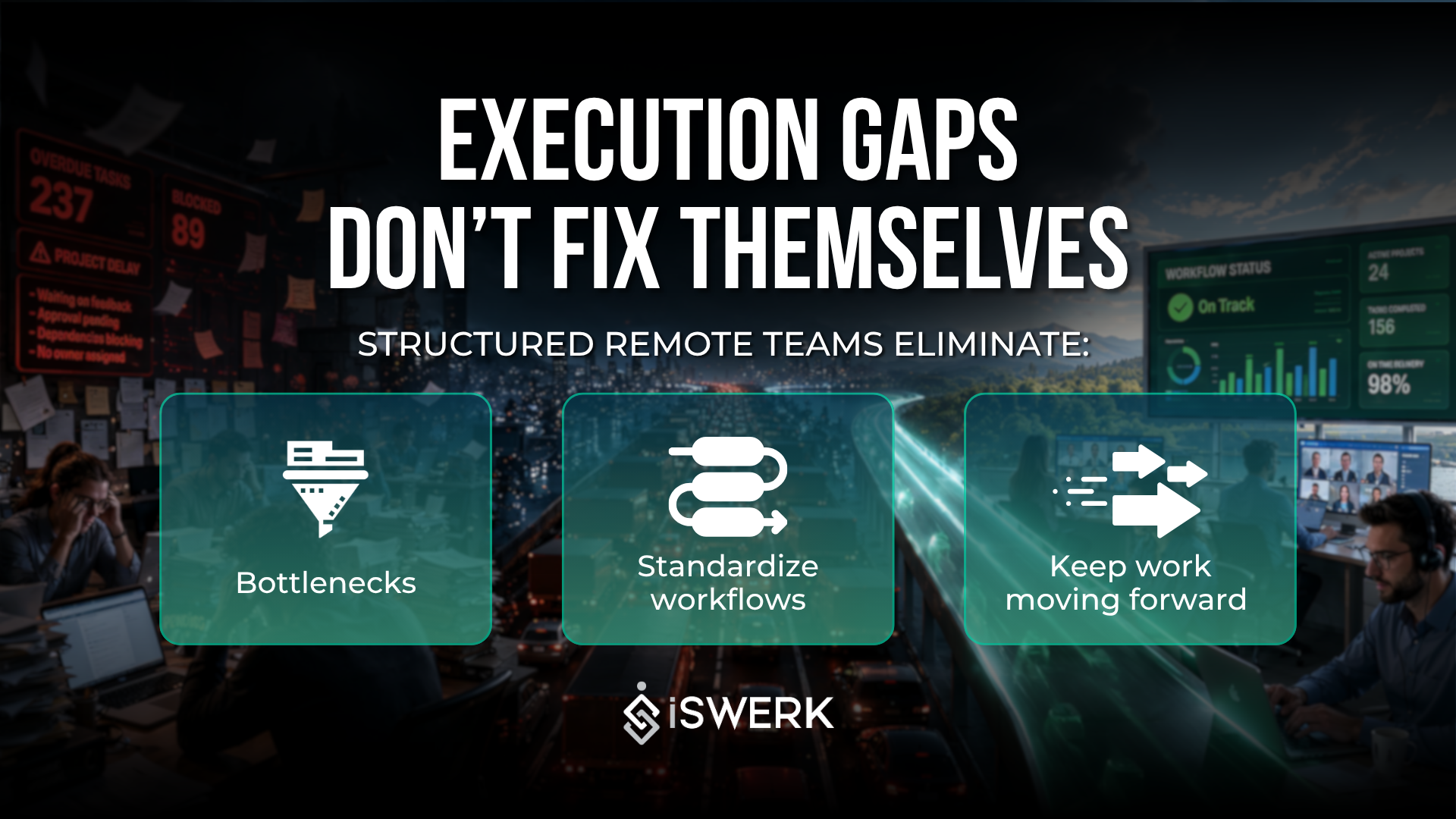
Remote execution teams supported by SOPs and clear KPIs can help businesses reduce execution debt by improving consistency, accountability, and follow-through.
Instead of relying solely on in-house teams, companies can build structured remote team or scale through a global capability center that:
- Executes repeatable workflows with precision
- Maintains alignment through standardized processes
- Tracks progress through KPI-driven reporting
- Reduces reliance on leadership for day-to-day coordination
- Improves turnaround time and operational efficiency
The key is not just adding people. But building a system where those people operate within clearly defined processes and performance metrics.
Conclusion: Turning Strategy Into Results
Execution debt doesn’t appear overnight. It builds gradually through small inefficiencies, unclear expectations, and overloaded teams. But it can also be systematically reduced.
The most successful organizations recognize that strategy requires an equally strong execution layer. They invest in operational clarity, measurable performance, and scalable support models—whether through remote staffing or a well-structured global capability center.
By combining remote staffing with SOPs and KPIs, businesses can close the gap between strategy and results—transforming plans into consistent, measurable outcomes.
Ready to strengthen your execution?
Discover how iSWerk, a premiere remote staffing solutions in the Philippines, helps businesses build high-performing remote teams and global capability centers designed for process-driven execution, accountability, and scalable growth.