
The true cost of open roles is critical for organizations that want to scale efficiently. Adopting faster hiring solutions, particularly through remote staffing, can significantly reduce these hidden costs.
Most companies view an open role as a temporary inconvenience, something to resolve when the right candidate becomes available. On paper, it may even look like a short-term cost saving. But in reality, the cost of vacancy is far higher, and far less visible than many leaders realize.
When a position stays unfilled, the business still carries fixed costs while the work tied to that role goes undone or gets redistributed.
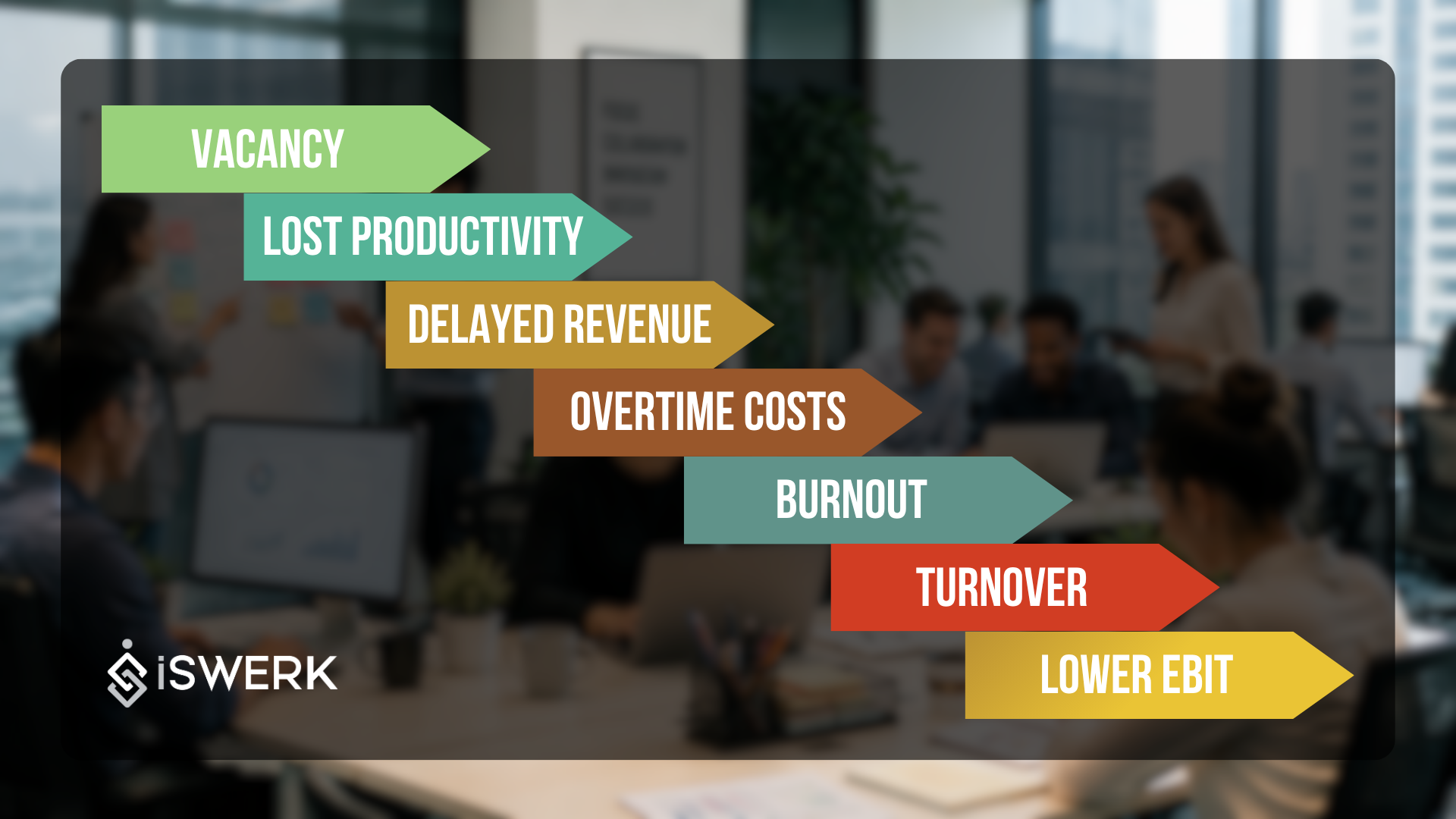
Over time, that gap becomes expensive in ways that are easy to miss on a standard hiring dashboard. It functions like a tax on EBIT, reducing profitability without ever appearing as a line item on a financial report.
Why vacancies cost more than salary savings
Some leaders assume an unfilled position saves money because payroll is temporarily lower. That view misses the bigger picture.
The hidden cost of open roles includes:
- Lost revenue from delayed execution or missed sales activity.
- Lower productivity when teammates absorb extra work.
- Overtime costs or contractor spend used to patch the gap.
- Slower decisions because managers are stretched thin.
- Lower customer satisfaction when service levels slip.
- Higher attrition risk due to overloaded employees burning out.
A vacancy can therefore act like a silent drain on operating performance. The longer it lasts, the more the drain compounds.
How vacancies hit EBIT
EBIT reflects the profit a company generates from its core operations. When a role stays open, revenue-producing activity slows while many operating costs continue, which can reduce operating profit.
This matters most in roles tied directly to sales, delivery, operations, or leadership. One vacancy can delay output across an entire team, which means the financial impact can spread far beyond the missing role itself.
In that sense, open positions act like a hidden tax on performance. The longer they remain open, the more they erode profitability.
The compounding effect of delay
Vacancy cost is not static. It grows the longer the seat stays empty, because the burden shifts to others, and the business becomes less responsive.
That typically shows up in three ways:
- Work redistribution, which lowers the quality and speed of the team’s output.
- Decision delays, slow execution, and create more friction.
- Morale damage can lead to disengagement and even more turnover.
This is why “we’ll just wait a little longer” is often expensive. A short delay may seem manageable, but once the role becomes a long-term gap, the indirect cost starts to outweigh the effort of hiring faster.
Faster hiring solutions that protect profit
According to SHRM industry reporting shares that the average cost to fill a position at about $4,129 over 42 days, before hidden costs like overtime, lost productivity, and coverage gaps are added. That means every extra week a critical role stays open can quietly erode margins and slow execution.
Companies that want to reduce the cost of open roles need faster hiring solutions that shorten vacancy time and restore output quickly.
One of the most effective approaches is remote staffing, which expands access to talent beyond a single local market.
With remote staffing for growing teams, companies can hire faster, scale more flexibly, and fill hard-to-source roles without waiting for the ideal local candidate to appear. This can lead to significant reductions in time-to-fill, especially when businesses need specialized support quickly.
Why remote staffing works
Faster fill rate through remote hiring can reduce vacancy cost by widening the talent pool and shortening time-to-hire. Instead of limiting the search to one city or labor market, companies can access qualified candidates across regions and time zones.
That broader reach often helps businesses hire sooner, especially hard-to-fill roles. It also allows companies to build more flexible workforce models, which is valuable when speed matters and local talent is scarce.
Remote hiring can improve the vacancy equation in several ways:
- More candidates enter the funnel
- Shorter time-to-fill for hard-to-source roles
- Lower dependency on a single labor market
- Faster business continuity when a role opens unexpectedly
- Better alignment between demand and available talent
For EBIT, the benefit of remote staffing is straightforward: the sooner the role is filled, the sooner the business can restore output and stop the profit leak.
A simple example
Imagine a revenue-support role that contributes directly to pipeline generation or client retention. If that role stays open for 60 days, the business may lose far more than two months of salary savings.
During those 60 days, the company could be missing revenue opportunities, overloading adjacent team members, and slowing delivery. If faster hiring solutions such as remote staffing in the Philippines cut that vacancy period, the business can restore output sooner and limit the financial drag.
That is the real point: the value of faster hiring is not just convenience. It’s financial recovery.
What leaders should track
To manage vacancy cost properly, leaders should track more than time-to-fill. They should connect hiring performance to business impact.
Useful metrics include:
- Time-to-fill for critical roles.
- Revenue per employee or revenue tied to the role.
- Cost of overtime or temporary coverage.
- Customer impact during vacancy periods.
- Team productivity changes while the role is open.
- Attrition risk in teams covering the gap.
This approach helps leaders see vacancies as operating risks, not just staffing events. Once the financial effect is visible, hiring speed becomes a business priority instead of an HR metric.
Final thought
Open roles may look harmless on paper, but in practice they can be a hidden tax on EBIT. The longer a role stays vacant, the more revenue, productivity, and momentum the business gives up.
Faster fill rate through remote hiring offers a practical way to reduce that drag and keep the business moving.
If reducing vacancy costs is a priority, exploring remote staffing with iSWerk could be a helpful next step.