
Executive Summary
As workforce models evolve, organizations are combining fractional talent with dedicated remote teams to access specialized expertise, accelerate execution, optimize costs, and scale operations with greater agility, efficiency, and a more flexible workforce strategy.
Introduction
Companies entering 2027 are facing a new reality: growth no longer depends on hiring more full-time employees. It depends on accessing the right expertise at the right time.
For many businesses, that means moving away from traditional hiring models and toward a more flexible workforce strategy. Instead of building large internal teams, organizations are increasingly combining fractional leadership with remote staffing in the Philippines to gain specialized expertise, increase operational capacity, and control costs.
The shift is happening across industries. Finance leaders are engaging fractional CFOs to navigate growth and profitability. Technology companies are bringing in fractional CTOs to guide AI initiatives and digital transformation. Marketing teams are partnering with fractional CMOs to accelerate demand generation and brand growth.
But leadership alone doesn’t drive results.
Strategy still requires execution. And that’s where remote teams play a critical role.
The organizations gaining the greatest advantage in 2027 are not choosing between fractional talent and remote staffing. They’re using both. By pairing experienced fractional leaders with dedicated remote teams in the Philippines, businesses can access executive-level expertise while creating the operational capacity needed to execute quickly and scale sustainably.
Why Fractional Talent Is Peaking in 2027
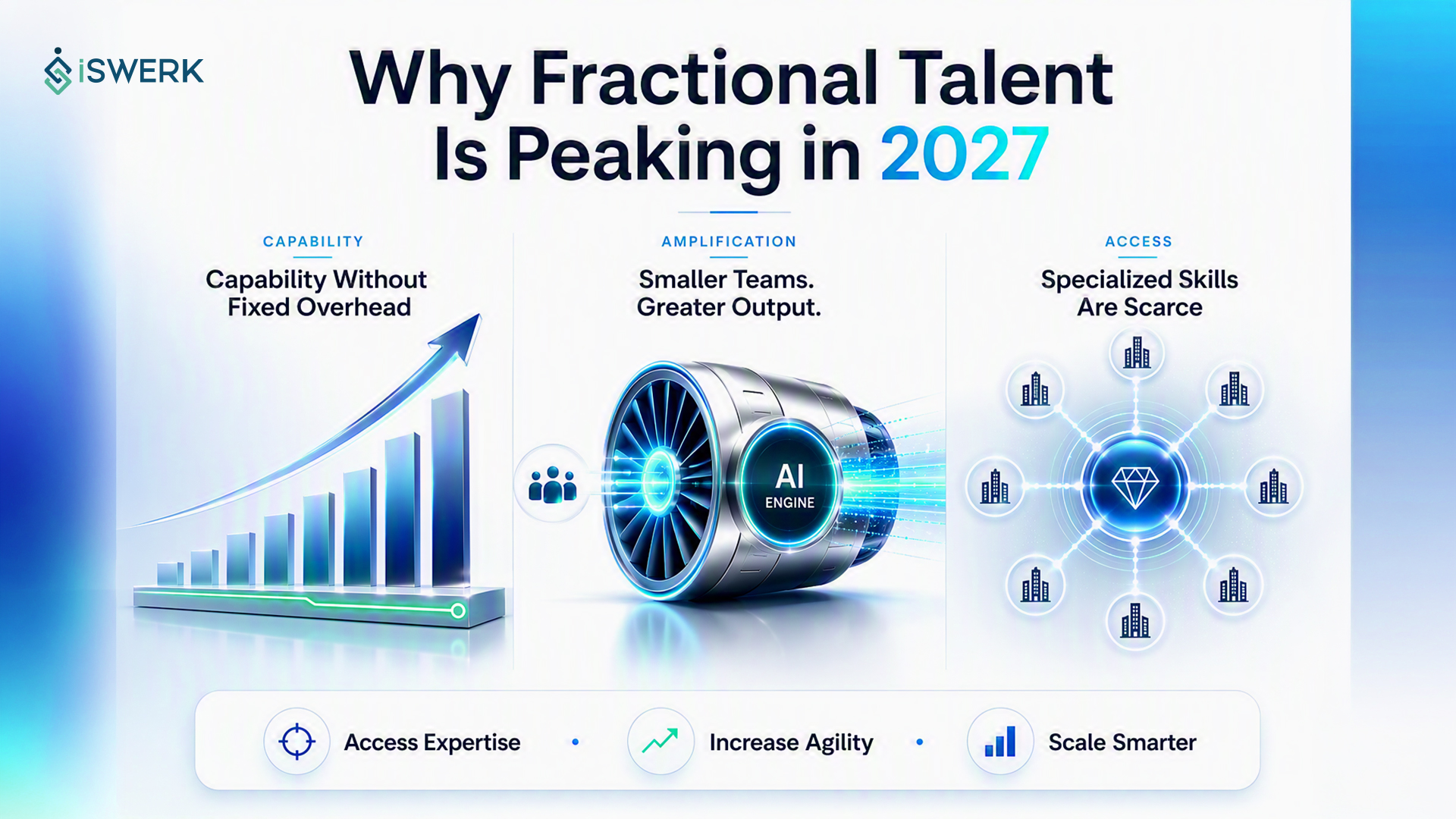
Gartner forecasts that by 2027, more than 30% of midsize enterprises will have at least one fractional executive on retainer. Three major forces are accelerating the adoption of fractional and on-demand talent.
Companies Want Capability Without Fixed Overhead
Organizations no longer need to hire every leadership role full time. Fractional executives can provide senior-level guidance, strategic planning, and operational oversight at a fraction of the cost of hiring a permanent executive.
AI Is Making Smaller Teams More Powerful
AI-powered workflows allow experienced professionals to achieve more with leaner teams. Rather than building large departments, organizations are focusing on assembling high-performing talent ecosystems that combine human expertise, automation, and specialized support.
Specialized Skills Remain Difficult to Access
Technology transformation, cybersecurity, AI implementation, finance modernization, and growth marketing all require expertise that can be expensive and difficult to recruit. Fractional hiring enables organizations to access these skills without committing full-time executive compensation.
As a result, businesses are increasingly purchasing outcomes rather than headcount.
The Missing Piece: Remote Staffing in the Philippines
While fractional leaders bring experience and strategic direction, companies still need skilled professionals to execute initiatives, support operations, and maintain momentum.
This is where remote staffing in the Philippines has become a strategic advantage.
The Philippines continues to attract global employers because of its deep talent pool, strong English proficiency, cultural compatibility with Western businesses, and significant cost efficiencies. More importantly, the country’s workforce has evolved far beyond traditional support functions.
Today, businesses can build dedicated teams in the Philippines across:
- Software engineering
- AI and data operations
- Marketing and content production
- Finance and accounting
- Customer experience
- Sales development
- Administrative operations
For growing organizations, this creates an opportunity to scale execution without significantly expanding payroll costs.
Instead of hiring an entire local department, companies can combine one experienced fractional leader with a highly capable remote team that operates as an extension of their business.
The 2027 Operating Model: Fractional Leadership + Philippine Remote Teams
The most effective workforce strategy for many SMBs and mid-market companies is a two-layer operating model.
Layer 1: Fractional Leadership
Responsible for strategy, governance, decision-making, and transformation.
Examples include:
- Fractional CFOs overseeing financial planning and business performance
- Fractional CMOs leading growth strategy and market positioning
- Fractional CTOs directing technology modernization and AI adoption
Layer 2: Remote Teams in the Philippines
Responsible for execution, operational support, and scalability.
Examples include:
- Finance analysts and accounting specialists
- Content marketers and campaign operators
- Software engineers and DevOps professionals
- Customer support representatives
- Sales development representatives
- Executive assistants and business support specialists
Together, these layers create a workforce model that combines senior leadership with scalable execution, allowing organizations to move faster without significantly increasing fixed costs.
A Real-World Example of the Model in Action
Consider a growing SaaS company preparing for its next stage of expansion.
Rather than hiring a full-time CTO and building an expensive local engineering department, the company engages a fractional CTO to define architecture, development priorities, and technology strategy.
The CTO is then supported by a dedicated remote development team in the Philippines responsible for implementation, testing, integrations, and ongoing product enhancements.
The result is a structure that provides executive-level leadership alongside cost-effective execution, allowing the business to accelerate development while maintaining financial discipline.
Variations of this model are being applied across finance, marketing, customer experience, and operations teams worldwide.
Is This Model Right for Your Business?
You may benefit from combining fractional leadership with remote staffing in the Philippines if your organization is experiencing any of the following:
- Growth is outpacing your team’s capacity
- You need executive expertise but cannot justify a full-time hire
- Important initiatives are moving too slowly
- Hiring locally is becoming increasingly expensive
- You want a more flexible workforce strategy
- You need specialized skills without long recruitment cycles
For many companies, this approach creates a more agile way to scale while reducing the operational risk associated with aggressive hiring.
Why Many Businesses Turn to Specialist Remote Staffing Partners
Building a remote team successfully requires more than simply filling positions.
The right partner helps businesses identify skill gaps, source high-quality talent, build retention strategies, establish performance expectations, and create long-term workforce scalability.
As demand for dedicated remote teams continues to grow, providers such as iSWerk have emerged as trusted partners for organizations seeking high-performing remote talent in the Philippines.
By helping businesses access skilled professionals across finance, technology, marketing, customer support, and operations, iSWerk enables companies to focus on growth while building a sustainable workforce strategy.
The Bottom Line for 2027 Planning
The conversation around workforce strategy is evolving.
Forward-thinking companies are no longer asking whether they should hire full-time employees, outsource work, or engage fractional talent. They are designing workforce models that combine all three.
By pairing fractional executives with remote teams in the Philippines, businesses can gain senior-level expertise, accelerate execution, and scale operations without taking on unnecessary overhead.
In 2027, competitive advantage will belong to organizations that can access capability faster than their competitors.
For many businesses, that capability will come from a combination of fractional leadership and dedicated remote teams built to support growth.
Ready to Explore Remote Staffing in the Philippines?
Whether you’re evaluating your first remote hire or building a larger dedicated team, the right workforce structure can help you scale faster while maintaining operational efficiency.
iSWerk helps businesses build high-performing remote teams in the Philippines across technology, finance, marketing, customer experience, and business operations.
If you’re planning your 2027 workforce strategy, now is the time to explore how fractional leadership and remote staffing can work together to create sustainable growth.