
Single-location concentration now carries more risk than efficiency for U.S. businesses. This blog explains how distributed operations, supported by remote staffing, can protect continuity, reduce downtime, and improve resilience. It also shows why diversified support models help companies respond more quickly to disruptions while maintaining service quality and client confidence.
When a single site goes dark, SLAs, revenue, and reputation can follow fast. Single-location risk has moved from theoretical to immediate for many enterprises after repeated events: natural disasters, telecom outages, and localized regulatory disruption. Remote staffing and strategic outsourcing, particularly outsourcing in the Philippines, offer practical ways to reduce downtime, protect continuity, and preserve client trust.
What is a single-location risk?
Single-location risk describes the exposure that arises when critical functions depend on a single geographic site, a single vendor, or a small cluster of employees. It shows up as single-site concentration, single-vendor dependence, and single-person failure points.
That can mean a support center in one U.S. city, a finance team in one building, or a workflow that sits with one offshore partner. If something interrupts that location, the business has little room to absorb the shock.
For organizations that tap outsourcing or remote staffing, this often means a single city or center carries disproportionate operational weight, so that one outage or mass resignation can ripple across the business.
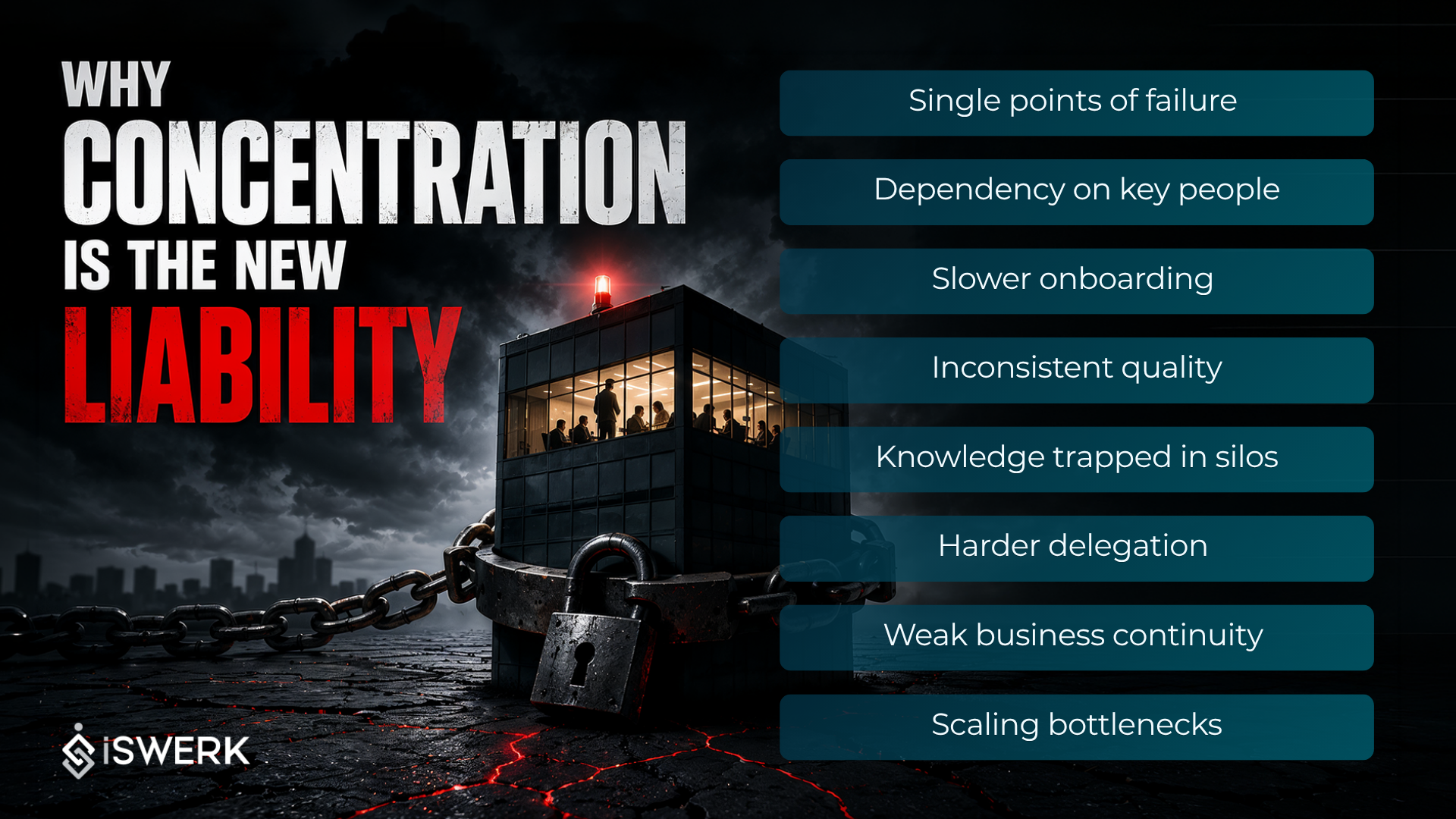
Why concentration is the new liability
Concentration amplifies the likelihood that a local event becomes an enterprise problem.
Operationally, a single-site outage can trigger prolonged downtime and SLA breaches.
Talent-wise, localized turnover or labor strikes create immediate capacity shortfalls. From a security and compliance perspective, relying on one vendor or location concentrates audit and data residency risk.
Financially, the costs stack up: recovery expenses, SLA penalties, expedited hiring, and potential client churn. In short, efficiency gains from concentration can vanish the moment the unexpected happens.
For U.S. companies working across time zones, concentration is especially risky because it can slow recovery. If a domestic team goes offline, there may be no one immediately available to pick up the workload. That is where remote staffing and outsourcing can create meaningful protection.
Distributed staffing, remote staffing, and outsourcing as fixes
The defensive architecture is simple in concept and strategic in practice: distribute.
Multi-site capability centers, hybrid remote staffing models, and blended outsourcing reduce single points of failure by spreading people, skills, and systems across locations and modalities.
Remote staffing creates flexible capacity that can be activated from anywhere. Multi-site outsourcing ensures that work can be rerouted when one center is compromised.
Outsourcing is often discussed only in terms of cost, but that misses the bigger picture. In a resilience strategy, outsourcing is useful because it allows companies to shift workloads to a partner that already has people, processes, and infrastructure in place.
When executed well, especially with trusted outsourcing partners in the Philippines, these approaches maintain service levels while minimizing systemic risk.
Talent redundancy vs. Overstaffing
Effective redundancy does not mean doubling the headcount. It means mapping critical skills across locations, establishing cross-training and shadow rosters, creating centralized runbooks, and enforcing redundancy SLAs for key functions.
A process should not depend on one person knowing the full workflow. It should be documented well enough that another trained team member can step in. A service queue should not stop because one supervisor is unavailable. A payroll, billing, or support function should have enough coverage that work can continue if someone calls in sick or if a location is offline.
Smart talent redundancy uses staggered shifts, knowledge-transfer programs, and documented playbooks, so backup teams can step in immediately, reducing recovery time objectives (RTOs) at a lower cost.
Trade-offs and mitigations
Remote teams or distributed models add governance complexity and modest cost. More vendors, more coordination, and stricter compliance controls are real considerations.
Mitigate them with centralized orchestration, automation for failover and observability, clear SLA contracts, and ROI metrics tied to downtime reduction and customer impact.
How remote staffing in the Philippines reduces risk
Remote staffing in the Philippines gives U.S. companies access to skilled teams that can support business functions outside the main domestic location. That matters because it creates a second line of defense. Instead of relying on a single office or region, companies can distribute work across time zones, geographies, and operating models.
This does not mean replacing in-house teams. It means building a structure that can keep working if one pa rt of the organization is disrupted. A finance process, customer service queue, recruiting workflow, or administrative task can continue with trained remote staff in the Philippines if the U.S. team is offline. That kind of flexibility turns staffing into a continuity asset.
Remote staffing also helps with talent redundancy. If one employee is unavailable, another trained remote team member can step in. If one location is interrupted, another can absorb the work. That is a stronger model than trying to protect a single center from every possible risk.
Next steps for leaders
Concentration looks efficient until it is not. Audit your single-location exposures, run a pilot that combines remote staffing with dual-sourced outsourcing, and measure continuity of KPIs such as RTO, RPO, and customer-impact hours.
Start with a focused 30 to 60-day pilot in one function, validate the playbooks, and then scale.
If you are evaluating ways to reduce single-location risk, improve continuity, or strengthen your remote staffing model, book a no-obligation consultation with iSWerk to explore the options that fit your business.
About the Author
Denise Romero works as a copywriter at iSwerk (iSupport Worldwide), where she specializes in B2B content that helps businesses flourish. She specializes in creating clear, compelling messages that engage professional audiences and support strategic marketing goals.
About iSWerk
iSWerk is a leading remote staffing company in the Philippines that connects businesses with top remote talent. We streamline recruitment, payroll, and training to empower SMEs with tailored solutions, cutting labor costs by up to 60%. iSWerk delivers excellence in remote staffing and flexible work solutions. Explore how you can achieve your business goals with iSWerk today