A modern GTM operating model aligns marketing, sales, and revenue operations to consistently convert pipeline into revenue. By integrating scalable remote teams across SDR support, RevOps enablement, and analytics, businesses gain operational leverage, improving pipeline velocity, increasing efficiency, and scaling execution without compromising visibility and control across the revenue engine.
Introduction: The Pipeline Illusion
Modern revenue teams are not short on tools or pipelines. Most organizations already have CRM systems, sales engagement platforms, marketing automation, and strong demand generation.
Yet pipeline growth still doesn’t consistently translate into revenue.
Many companies lack a cohesive go-to-market GTM operating model that aligns people, processes, and systems. As a result, go-to-market operations become fragmented, and pipeline slows down before it reaches revenue.
For leaders thinking about how to scale revenue teams without adding headcount, this challenge is especially critical.
Increasing hiring alone is no longer sustainable. Instead, organizations are rethinking how remote work, remote teams, and scalable remote support can unlock execution capacity without increasing fixed costs.
Pipeline Is No Longer the Goal
Pipeline growth has long been seen as the primary signal of success. But for modern revenue teams, that approach is incomplete.
From Pipeline Volume to Pipeline Efficiency
Today’s high-performing teams prioritize:
- Pipeline acceleration
- Conversion quality over volume
- Faster deal progression
- Stronger revenue operations discipline
- Higher GTM efficiency
The focus shifts from generating demand to improving execution.
The real question becomes, “How do you improve pipeline velocity with operations?”
This is where operational leverage comes into play. Instead of adding more in-house staff, organizations are finding smarter ways to expand execution capacity through remote staffing models and distributed teams.
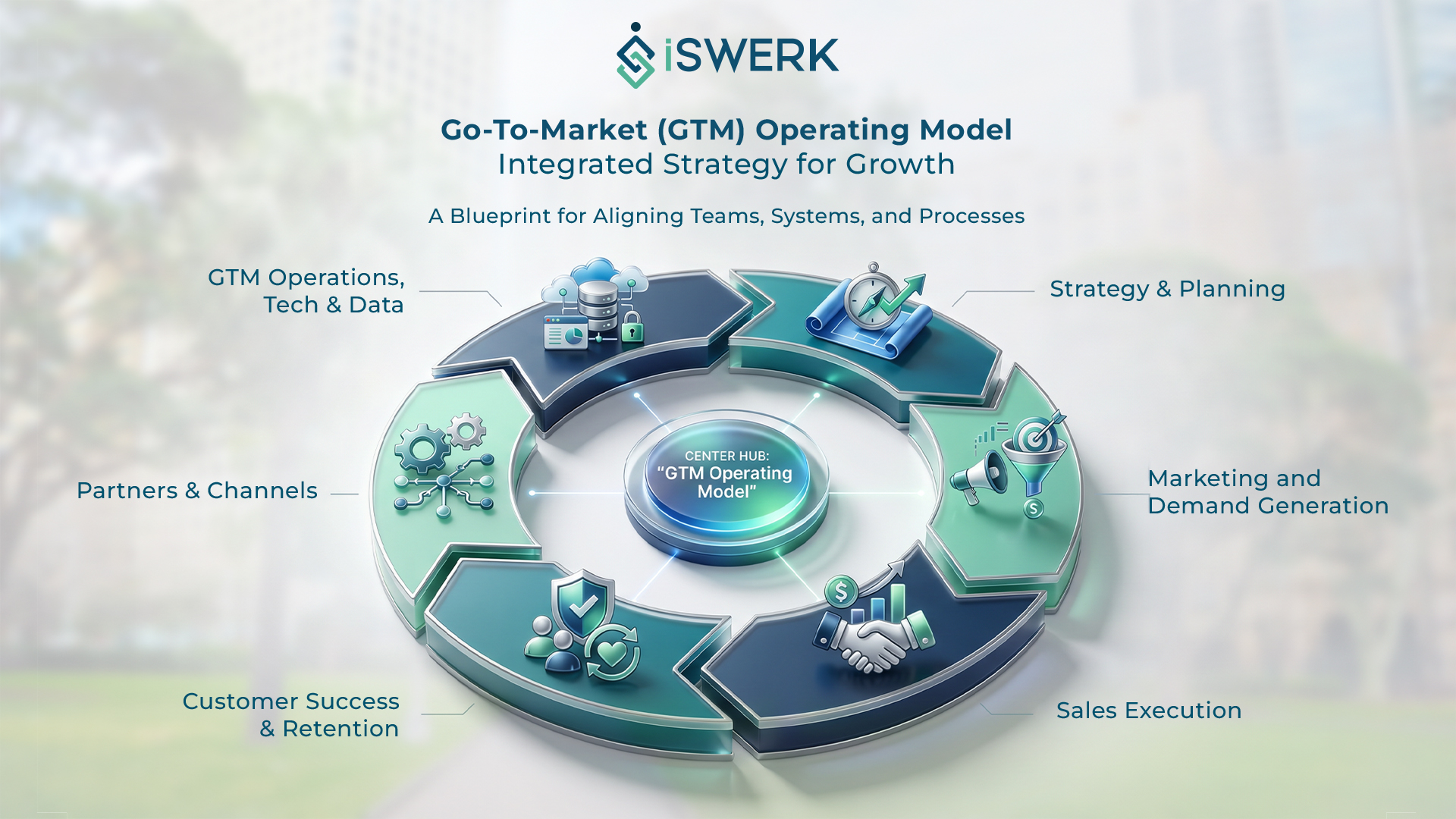
The New Go-To-Market Operating Model
The modern GTM operating model is built on alignment and execution—not just headcount expansion.
Aligning the Revenue Engine
High-velocity teams bring together:
- Marketing
- Sales development (sales development support)
- Sales
- Customer success
- Revenue operations and RevOps enablement
- Revenue team analytics
This alignment transforms disconnected teams into a unified system designed to build a faster go-to-market engine.
A Scalable Revenue Go-To-Market Framework
Leading teams operate across six interconnected layers:
- Demand creation
- Qualification (supported by strong SDR team support)
- Opportunity management
- Forecasting
- Revenue intelligence via GTM analytics
- Continuous optimization
This structure enables high-velocity GTM teams to increase output without hiring more staff by improving coordination, visibility, and execution.
Why Execution Breaks at Scale
As the pipeline grows, execution becomes more complex, and inefficiencies compound quickly.
Common Bottlenecks in Go-to-Market Operations
- Poor CRM hygiene and inconsistent data
- Slow lead routing and delayed response times
- Gaps in sales development support capacity
- Inconsistent reporting across tools
- Limited revenue team analytics visibility
- Manual admin work limiting seller productivity.
These issues prevent teams from achieving true pipeline acceleration.
Why Adding More People Isn’t the Answer
Many organizations respond with in-house hiring, but this creates new challenges:
- Rising costs
- Longer onboarding cycles
- Process inconsistency
This is why more teams are exploring remote staffing and global outsourcing models, not as replacements for internal teams, but as extensions that provide flexibility and speed. and global outsourcing models, not as replacements for internal teams, but as extensions that provide flexibility and speed.