
Cost reduction lowers existing expenses, while cost avoidance prevents future costs. Both improve profitability, but in different ways. Businesses that rely solely on cost-cutting risk damaging output and growth. Cost avoidance, especially through remote staffing, helps protect margins by preventing unnecessary headcount, tooling, and hiring costs before they occur.
Cost Reduction vs. Cost Avoidance: Which One Actually Improves Profitability?
When businesses look to improve profitability, the default response is often to cut costs. Budgets are trimmed, hiring slows, and teams are asked to do more with less. This is cost reduction. It delivers immediate results, but it is only part of the equation.
There is another lever that is often overlooked: cost avoidance. Instead of cutting expenses after they appear, cost avoidance focuses on preventing unnecessary costs from happening at all.
Understanding the difference between these two strategies is critical. More importantly, knowing when to use each can determine whether a company simply survives cost pressure or builds sustainable profitability.
Cost Reduction: Immediate, But Not Always Strategic
Cost reduction is straightforward. It means lowering existing expenses to improve margins. This might include reducing staff, renegotiating contracts, or eliminating tools and subscriptions.
The benefit is clear. Cost reductions appear immediately in financial reports. It is measurable, visible, and often necessary, especially during periods of financial pressure.
However, there is a downside.
Aggressive cost-cutting can create hidden costs:
- Reduced team capacity slows execution.
- Overworked employees lead to burnout and turnover.
- Lower investment in tools impacts productivity.
- Quality issues create rework and customer dissatisfaction.
In other words, cost reduction can improve profitability today while quietly damaging it tomorrow. It is reactive. It solves what already exists, not what is coming next.
Cost Avoidance: The Invisible Driver of Profitability
Cost avoidance works differently. Instead of reducing current expenses, it prevents future costs from becoming problems.
This requires more planning. It also requires leaders to think beyond immediate gains and focus on long-term efficiency.
Examples of cost avoidance include:
- Investing in processes that reduce rework or errors
- Using scalable systems instead of fixed infrastructure
- Avoiding premature hiring or expansion
This matters because hiring itself is expensive, and mistakes are even more costly. The average cost to replace an employee can reach 50% to 200% of their annual salary, according to SHRM., according to SHRM.
Unlike cost reduction, cost avoidance is harder to measure. You are tracking costs that never happened. But this is exactly where its power lies, preventing large downstream losses before they appear on the balance sheet.
Which One Actually Improves Profitability?
The answer is not either-or. Both strategies play a role, but they impact profitability differently.
Cost reduction improves profitability in the short term. It is useful for eliminating waste or correcting inefficiencies.
Cost avoidance improves profitability in the long term. It ensures that costs do not scale faster than revenue.
The risk comes when businesses rely too heavily on cost reduction. Cutting is easier than restructuring, but it often limits growth and creates operational bottlenecks.
The most effective companies combine both:
- They reduce obvious inefficiencies.
- They design systems that support long-term cost management strategies for businesses.
Remote Staffing as Cost Avoidance
One of the clearest examples of cost avoidance in modern business is remote staffing.
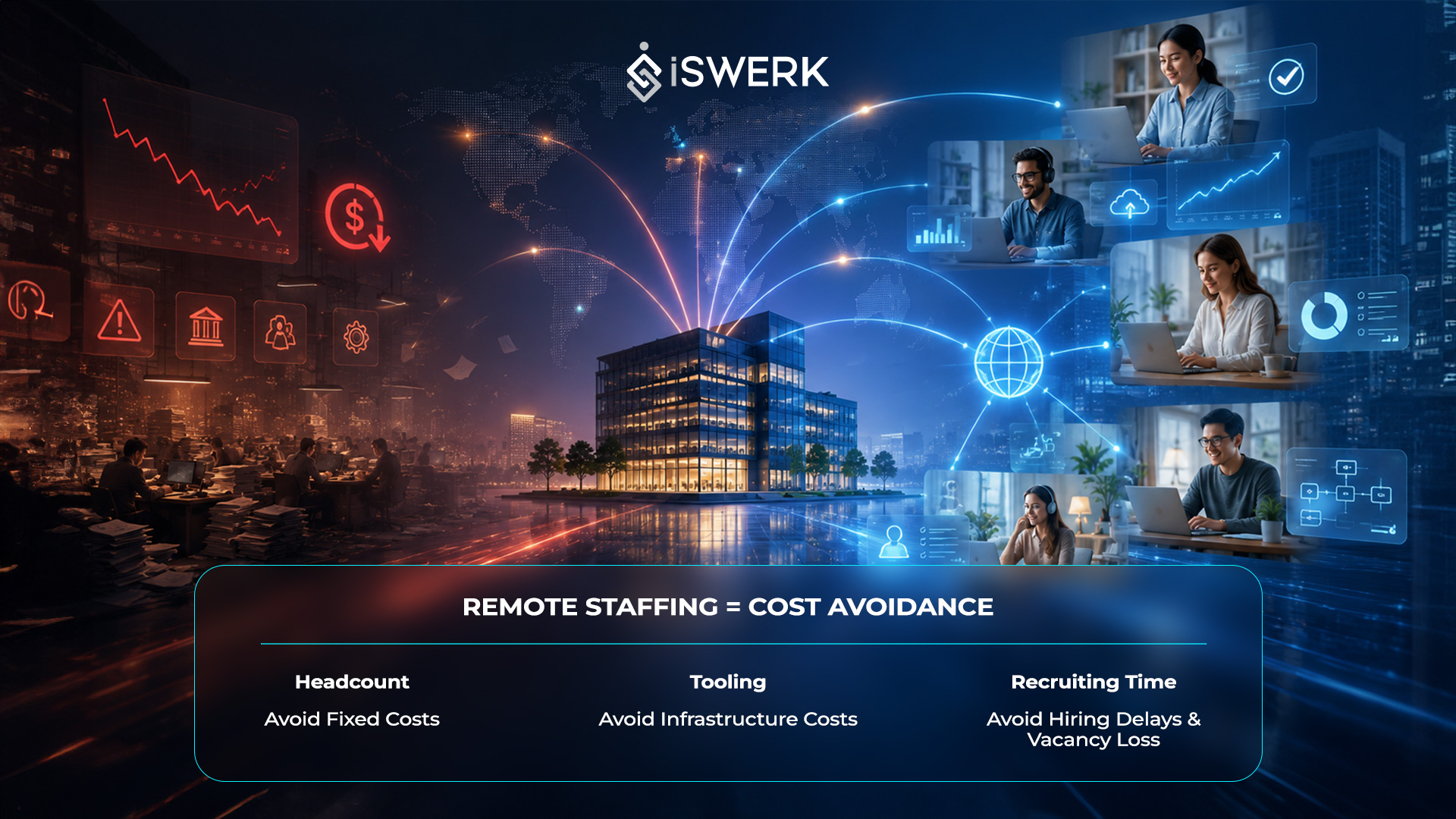
Due to lower labor expenses, many businesses see remote staffing as a cost-cutting strategy. But its greater value lies in cost avoidance, specifically in preventing three major expense categories.
1. Headcount Flexibility
Traditional hiring creates fixed costs. Once you hire full-time employees, those costs remain whether demand increases or decreases.
Remote staffing allows businesses to add capacity only when needed. This avoids over-hiring and prevents long-term salary commitments that may not always be necessary.
Instead of cutting headcount later, companies avoid the problem entirely.
2. Tooling and Infrastructure
Scaling a team in a traditional model often requires additional office space, hardware, software licenses, and operational support.
Remote staffing reduces the need to expand internal infrastructure early. Instead of building systems for anticipated growth, companies can operate with leaner internal setups.
This helps avoid premature spending on tools and facilities that may not deliver immediate value.
3. Recruiting Time and Opportunity Cost
Hiring is not just expensive—it is time-consuming. Leaders spend hours sourcing candidates, conducting interviews, and managing onboarding.
This time has a cost. It takes focus away from strategy, operations, and revenue-generating activities.
Remote staffing models significantly reduce this burden. Faster access to vetted talent minimizes hiring delays and avoids the indirect costs of prolonged vacancies and leadership distraction.
A More Strategic Approach to Profitability
Profitability is not just about cutting costs. It is about managing how costs grow alongside the business.
Cost reduction keeps spending under control today. Cost avoidance ensures it does not spiral tomorrow.
The companies that outperform their competitors are not the ones that cut the deepest. They are the ones that design smarter operating models—ones that prevent unnecessary costs while maintaining the capacity to grow.
Remote staffing is one of the most effective ways to achieve this balance. By avoiding fixed costs in headcount, infrastructure, and hiring, businesses gain flexibility without sacrificing output.