Executive Summary
By 2030, business growth will depend more on access to skills than physical location. Remote staffing solutions and dedicated teams in the Philippines can help organizations secure critical talent, scale faster, and build workforce flexibility.
Introduction
Hiring the right talent is becoming harder, more expensive, and more competitive. Many organizations are struggling to fill critical roles while workforce requirements continue to evolve. Artificial intelligence, automation, and digital transformation are changing the skills employees need faster than traditional hiring models can adapt.
By 2030, the companies best positioned for growth may not be those located near the largest talent pools. They will be the ones that can reliably access the skills they need, regardless of geography.
The workforce of 2030 will not be completely location-free. However, for many knowledge-based roles, companies will increasingly compete on the skills they can access, not just on the people available within commuting distance.
The World Economic Forum projects that structural labor-market changes could affect 22% of today’s jobs by 2030, creating 170 million new roles while displacing 92 million. It also estimates that 39% of workers’ existing skill sets will be transformed or become outdated between 2025 and 2030.
These projections point to a major shift in workforce strategy. Employers will need to identify the capabilities required for growth, determine which roles can be performed across locations, and more deliberately combine local hiring, remote staffing, global talent, automation, and internal development.
The central question will become:
Which skills does the business need, and where can it access them reliably?
Increasingly, the answer involves remote staffing, global talent access, and dedicated teams in the Philippines.
Why Are Skills Changing Faster Than Job Titles?
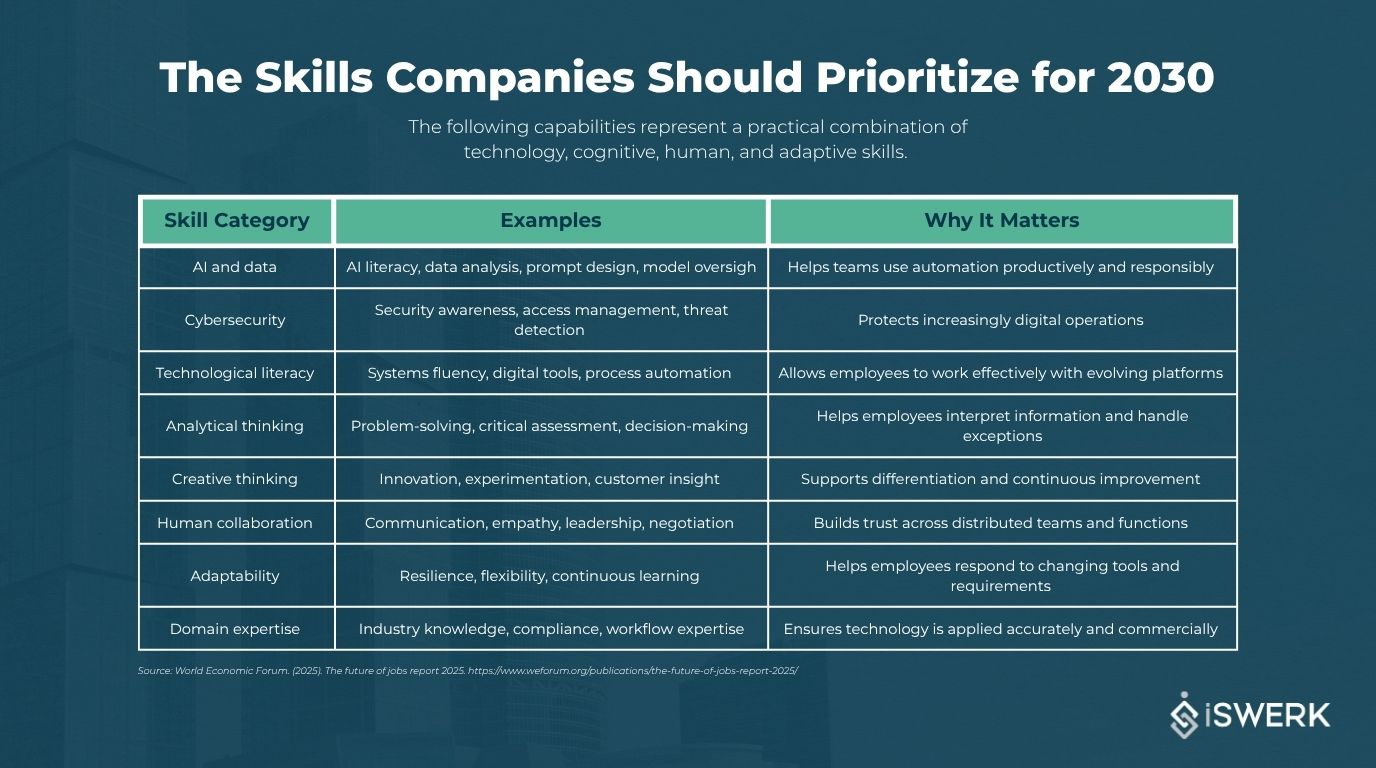
Traditional workforce planning has often revolved around job titles, degrees, and years of experience. However, technology is reshaping what employees do and the capabilities required to succeed.
Forbes has projected significant changes in the skills required across many professions during the same period.
The challenge for employers is that a job title no longer reflects a fixed set of capabilities.
Marketing professionals now work with AI tools, data analytics, and automation platforms. Finance teams increasingly rely on workflow automation and advanced reporting systems. Customer support teams require technical proficiency alongside strong communication skills.
As skills evolve, organizations must focus less on traditional hiring criteria and more on identifying the capabilities needed to achieve business goals.
Is Your Local Talent Market Limiting Business Growth?
Many organizations continue to rely primarily on local hiring markets. While this may be necessary for certain roles, it can create significant challenges when qualified talent is difficult to find.
Common hiring obstacles include:
- Extended recruitment timelines
- Rising compensation costs
- Talent shortages in specialized roles
- Increased competition for qualified candidates
- Delayed growth initiatives
In many cases, the issue is not a lack of talent.
It’s a lack of access to talent.
A capability that appears scarce in one city may be widely available elsewhere.
As businesses face growing pressure to scale, relying exclusively on local talent markets can unnecessarily limit workforce options. Organizations that expand their search beyond geographic boundaries often gain access to a larger and more diverse pool of qualified professionals.
Why Is Geography Becoming Less Important Than Access to Skills?
The rise of remote work has fundamentally changed how organizations build teams.
Today, many knowledge-based roles can be performed effectively from virtually anywhere when supported by strong processes, technology, and leadership.
Functions commonly supported through remote staffing solutions include:
- Customer support
- Finance and accounting
- Digital marketing
- Content production
- Administrative support
- Data analysis
- Business operations
- Software development
As a result, companies are increasingly evaluating talent based on capability rather than proximity.
A successful remote workforce strategy can help organizations:
- Access specialized skills faster
- Reduce hiring bottlenecks
- Expand operational capacity
- Improve workforce flexibility
- Support business growth
- Reduce dependence on a single hiring market
The competitive advantage no longer comes from where talent is located.
It comes from how effectively organizations can access and manage that talent.
What Immediate Workforce Actions Should Leaders Take?
The workforce trends expected to shape 2030 are already influencing organizations today.
Leaders can begin preparing now by taking several practical steps.
Identify Critical Skill Gaps
Look beyond open job positions and focus on workforce capabilities. These leaders ask:
- Which skills are most difficult to hire for today?
- Which functions are slowing growth?
- Which roles may become harder to fill over the next five years?
Identifying skill gaps early allows organizations to build a more resilient workforce strategy..
Reevaluate Which Roles Need to Be Local
Many businesses continue recruiting locally for positions that can be successfully performed remotely.
Review each role and determine whether physical presence is truly required.
Removing unnecessary geographic restrictions can significantly expand talent access.
Build Workforce Flexibility
Modern workforce planning should include multiple talent channels, including:
- Local hiring
- Remote staffing
- Dedicated remote teams
- Internal development
- Automation
Organizations that diversify workforce options are often better positioned to adapt as business requirements evolve.
Pilot a Remote Team
Rather than waiting for talent shortages to affect growth, companies can test remote staffing solutions through a small pilot team.
This approach helps leaders evaluate productivity, collaboration, scalability, and remote team management practices before expanding.
How Can Remote Staffing in the Philippines Support a Skills-First Workforce?
As competition for talent intensifies, businesses need practical ways to access skills beyond their immediate labor market.
This is one reason dedicated teams in the Philippines have become an increasingly attractive workforce solution.
Access Specialized Skills Faster
When critical capabilities are difficult to find locally, Philippine remote talent can help organizations fill positions more efficiently.
Common remote staffing solutions help businesses for:
- Customer support
- Finance and accounting
- Back-office operations
- Digital marketing
- Administrative support
- Research
- Technology functions
The goal is not simply to fill vacancies. It is to secure the skills required to support growth.
Scale More Flexibly
Workforce requirements change continuously.
Companies may need additional support during:
- Expansion initiatives
- Seasonal demand
- New customer acquisition
- Product launches
- Operational transformation projects
Dedicated teams in the Philippines provide a scalable way to increase capacity without being constrained by local hiring limitations.
Build Long-Term Workforce Resilience
Organizations that depend on a single labor market may face greater exposure to talent shortages and hiring disruptions.
Remote staffing provides access to broader talent pools while supporting workforce continuity and operational flexibility.
Most importantly, it allows organizations to access skills when and where they are needed.
If your local talent market cannot provide the skills your business needs, a strategically managed remote team in the Philippines can help you access those capabilities faster, increase workforce flexibility, and scale with less risk.
How Can Companies Prepare for a Skills-First Future?
The workforce of 2030 will not be defined by one office, one city, or one employment model.
It will be shaped by an organization’s ability to identify, access, and develop the capabilities needed to achieve business goals.
Business leaders should focus on:
- Understanding future skill requirements
- Removing unnecessary geographic barriers
- Building a flexible remote workforce strategy
- Investing in workforce development
- Expanding access to qualified talent beyond local markets
The companies best positioned for future growth will not necessarily be those located near the largest talent pools. They will be the ones that can reliably access the right skills wherever qualified professionals are available.
If your local talent market cannot provide the skills you need, remote staffing and dedicated teams in the Philippines can provide a practical path to accessing specialized talent, improving workforce flexibility, and supporting sustainable growth.
Geography will continue to matter.
But by 2030, access to skills may matter far more.
Ready to Build a Remote Team?
If you’re evaluating which roles can be supported through remote staffing and whether dedicated teams in the Philippines align with your growth objectives, iSWerk can help.
Talk to iSWerk about building a dedicated remote team that gives your business access to skilled Philippine talent, greater workforce flexibility, and a scalable path to long-term growth.