Executive Summary
As Sales, Marketing, and Admin teams go remote, success depends on structure—not location. This guide outlines the tools, processes, and performance frameworks needed to keep remote teams aligned and productive.
Discover how smart remote staffing can help your teams scale smoothly and sustainably.
Introduction
Remote work is no longer just a perk for tech teams—it has become a strategic move for businesses building modern Sales, Marketing, and Admin functions.
To scale while staying lean and flexible, many companies turn to remote staffing to fill crucial roles across departments that keep the business running every day.
With the right workflows, tools, and partner, remote sales teams, remote marketing teams, and remote admin support can operate smoothly and even outperform traditional setups.
Here’s what companies should know when these functions transition to remote work.
Why Remote Sales, Marketing, and Admin Are Becoming the New Normal
For years, organizations hesitated to take non-technical teams remote. Sales “needed the office,” marketing “needed in-person collaboration,” and admin “needed to be on-site.” Those assumptions have changed.
Businesses embrace remote and hybrid setups for sales and marketing due to its benefits.
Access to a broader talent pool
You’re no longer limited to talent in your immediate area. With remote staffing, you can hire skilled specialists from different regions who can match your team’s tools and time zone.
Lower operational costs
Moving roles remote reduces office space, utilities, and equipment expenditures. Leaders can scale teams without scaling overhead.
Better coverage and customer responsiveness
Many companies now build a blended workforce—an in-house core supported by remote sales support, marketing execution roles, or admin staff who cover extended hours.
Scalability without the hiring struggle
It’s harder (and more expensive) to find local talent for every role. Remote staffing helps fill gaps quickly, especially for execution-driven roles that don’t require physical presence.
The shift isn’t about location but designing a structure that supports distributed teams.
What Really Changes When Teams Go Remote
Moving Sales, Marketing, and Admin functions remote requires intention. The biggest changes aren’t about technology—they’re about communication and expectations.
Communication & Alignment Become More Intentional
Gone are the quick desk chats. Remote teams need:
- Clear communication channels
- Daily or weekly check-ins
- Documented goals
- Shared dashboards
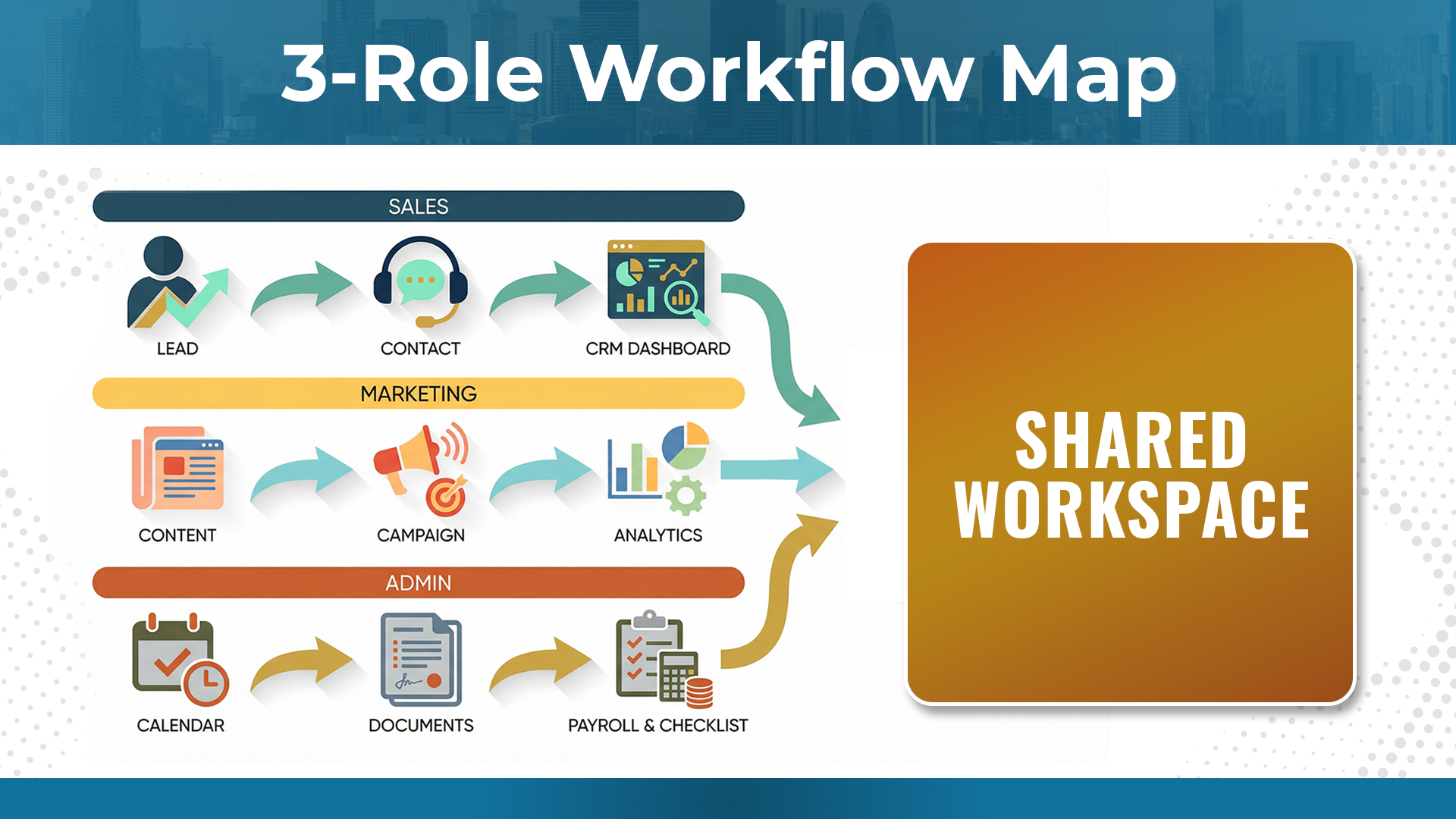
For remote sales teams, this means predictable pipeline reviews. For remote marketing teams, this means aligned calendars and deadlines. For admin roles, this means a clear prioritization system for tasks.
Performance Visibility Comes from Metrics, Not Proximity
Managers often fear losing visibility when they can’t “see” their employees. But remote-friendly KPIs solve this:
- Sales: calls made, demos booked, follow-ups completed
- Marketing: content produced, campaign performance, tasks closed
- Admin: response time, accuracy, turnaround speed
Clear outputs reduce the need for micromanagement.
Culture Must Be Built with Intention
Remote employees thrive when they feel included. Practices like virtual huddles, shoutouts for wins, and informal chat channels keep morale strong—even across continents.
Which Roles in Sales, Marketing, and Admin Work Best Remotely
One of the biggest misconceptions is that only back-end roles can be remote. In reality, many front-facing and cross-functional tasks adapt extremely well to remote staffing.
Sales Roles Ideal for Remote Staffing
Sales doesn’t need to happen in the office. What matters is consistency and pipeline progress.
Strong remote-friendly roles include:
- Sales Development Representatives (SDRs)
- Appointment setters
- Lead generation specialists
- CRM administrators
- Sales operations support
- Account coordinators
Example scenario:
An in-house sales manager focuses on closing deals, while a team of remote SDRs handles outreach, prospecting, and follow-ups—keeping the pipeline full without local hiring challenges.
Marketing Roles That Thrive Remotely
Marketing is one of the most remote-friendly functions due to its project-based nature.
Popular remote roles include:
- Content writers & copywriters
- Social media managers
- SEO specialists
- PPC/paid ads managers
- Graphic designers & video editors
- Marketing assistants for admin and reporting tasks
This structure lets your in-house lead own strategy while your remote marketing team executes consistently.
Admin Roles Perfect for Remote Work
Remote admin support has become a major driver of efficiency for growing companies.
Common remote staffing roles:
- Virtual assistants (VAs)
- Executive assistants
- Billing and invoicing support
- HR and recruitment operations
- Data entry and documentation specialists
- Email and calendar management
These roles keep operations running in the background so leaders can focus on priorities.
How to Set Remote Teams Up for Success
Remote success doesn’t happen by accident. Whether you’re building a remote sales team, expanding your remote marketing team, or adding remote admin support, the foundation is always the same: the right tools, clear processes, and well-defined expectations.
Here are the essential elements every company needs to set remote teams up for long-term success—especially when working with a remote staffing partner like iSWerk.
Use the Right Tools to Enable Seamless Remote Work
Remote teams rely on systems, not proximity. The goal is to eliminate guesswork and centralize collaboration.
Document Processes So Everyone Knows “How Things Work”
One of the biggest causes of friction in remote teams is unclear processes. Remote professionals perform best when expectations are documented, not implied.
Manage Performance Through Metrics, Not Micromanagement
Remote work requires a mindset shift—from monitoring activity to measuring outcomes. When expectations are clear, trust grows—and performance becomes easier to manage, regardless of location.
Build a Strong Onboarding Experience for Remote Staff
First impressions matter even more in a remote environment. A structured onboarding process sets the tone for performance and engagement.
When remote team members feel supported early on, they become productive faster and stay engaged longer.
How iSWerk Supports Remote Sales, Marketing, and Admin Teams
Companies turn to iSWerk because building remote teams alone can be overwhelming. We help organizations build remote staffing strategies that work—matching them with skilled talent ready to integrate into existing workflows.
iSwerk provides:
- Pre-vetted remote professionals for Sales, Marketing, and Admin
- Alignment with your tools, culture, and time zone
- Support during onboarding
- Ongoing communication to ensure fit
- The flexibility to scale your team up or down
Whether you need a single virtual assistant or an entire remote sales support pod, we help set the foundation so your distributed teams’ function seamlessly.
Final Thoughts
When Sales, Marketing, and Admin go remote, the transformation isn’t just about moving work online—it’s about building a structure that supports clarity, collaboration, and accountability. With the right partner, remote staffing becomes a competitive advantage that helps businesses scale smarter, faster, and more sustainably.
If you’re exploring remote staffing options, book a free consultation with an iSwerk specialist today.