Summary
Retaining remote talent in the long-term is essential for companies building distributed teams. This article explores the real challenges of remote employee retention and outlines practical, people-first strategies to create stability, engagement, and growth, showing how the right remote staffing approach helps businesses turn remote talent into a long-term advantage.
As remote teams become a permanent part of how companies grow, partners like iSWerk help ensure that growth is built on stability, not turnover.
Introduction
Remote work has moved from a temporary solution to a permanent business strategy. Companies now rely on distributed teams to scale efficiently, access specialized skills, and stay competitive in a global market.
But as remote hiring becomes easier, retaining remote talent long-term has emerged as a far greater challenge.
High turnover in remote teams doesn’t just slow productivity—it disrupts momentum, increases costs, and undermines team culture.
Organizations that invest in keeping their remote employees engaged and supported are far more likely to build resilient, high-performing teams that grow with the business.
Why Retaining Remote Talent Matters More Than Ever
Hiring remote employees expands your talent pool, but it also increases competition for skilled professionals. Remote workers have more options than ever, and when they feel disconnected, undervalued, or stagnant, they don’t hesitate to look elsewhere.
Replacing a remote employee takes time and money for recruitment, onboarding, training, and lost productivity all add up. More importantly, frequent turnover erodes trust and continuity within teams.
Long-term employee retention, on the other hand, leads to stronger collaboration, deeper institutional knowledge, and more consistent results.
For companies focused on sustainable growth, retaining remote talent long-term is a strategic advantage.
Common Challenges in Retaining Remote Talent
Understanding why remote employees leave is the first step toward keeping them.
Lack of connection and belonging
Remote workers often feel isolated, especially when they’re treated as “out of sight, out of mind.” Without intentional inclusion, they can feel disconnected from the company’s mission and culture.
Communication gaps
Unclear expectations, infrequent feedback, or inconsistent communication can quickly lead to frustration and disengagement.
Limited visibility into growth
When remote employees don’t see a clear path forward, they may assume their role is temporary—even if the company intends otherwise.
Transactional hiring mindset
If remote roles are treated as short-term solutions rather than long-term investments, employees will respond in kind.
Hire for Long-Term Success, Not Just Immediate Needs
Employee retention starts before day one. Hiring remote talent solely based on technical skills often leads to misalignment down the road. Long-term success depends just as much on how someone works as on what they can do.
Look for candidates who demonstrate:
- Strong communication skills
- Accountability and self-management
- Comfort with autonomy and collaboration
- Alignment with your company’s values
Equally important is setting clear expectations early. When remote employees understand their role, responsibilities, and how success is measured, they’re more likely to feel confident and committed from the start.
Foster Engagement and Inclusion in Distributed Teams
Remote teams thrive when inclusion is intentional.
Creating a sense of belonging doesn’t require constant meetings—it requires consistency and empathy. Simple practices such as recognizing achievements, encouraging collaboration, and sharing company updates go a long way in making remote employees feel connected.
Transparency also matters. When remote workers understand the “why” behind decisions and feel trusted with information, they’re more likely to stay invested in the company’s success.
Engaged employees stay longer and contribute more meaningfully.
Support Career Growth and Stability
One of the biggest misconceptions about remote work is that growth opportunities are limited.
In reality, remote employees are just as motivated by development as in-office staff.
To retain remote talent long-term, companies should provide:
- Clear role progression and performance expectations
- Regular feedback and goal-setting
- Access to learning and skill development opportunities
When employees see a future with your company, they’re far more likely to commit to it.
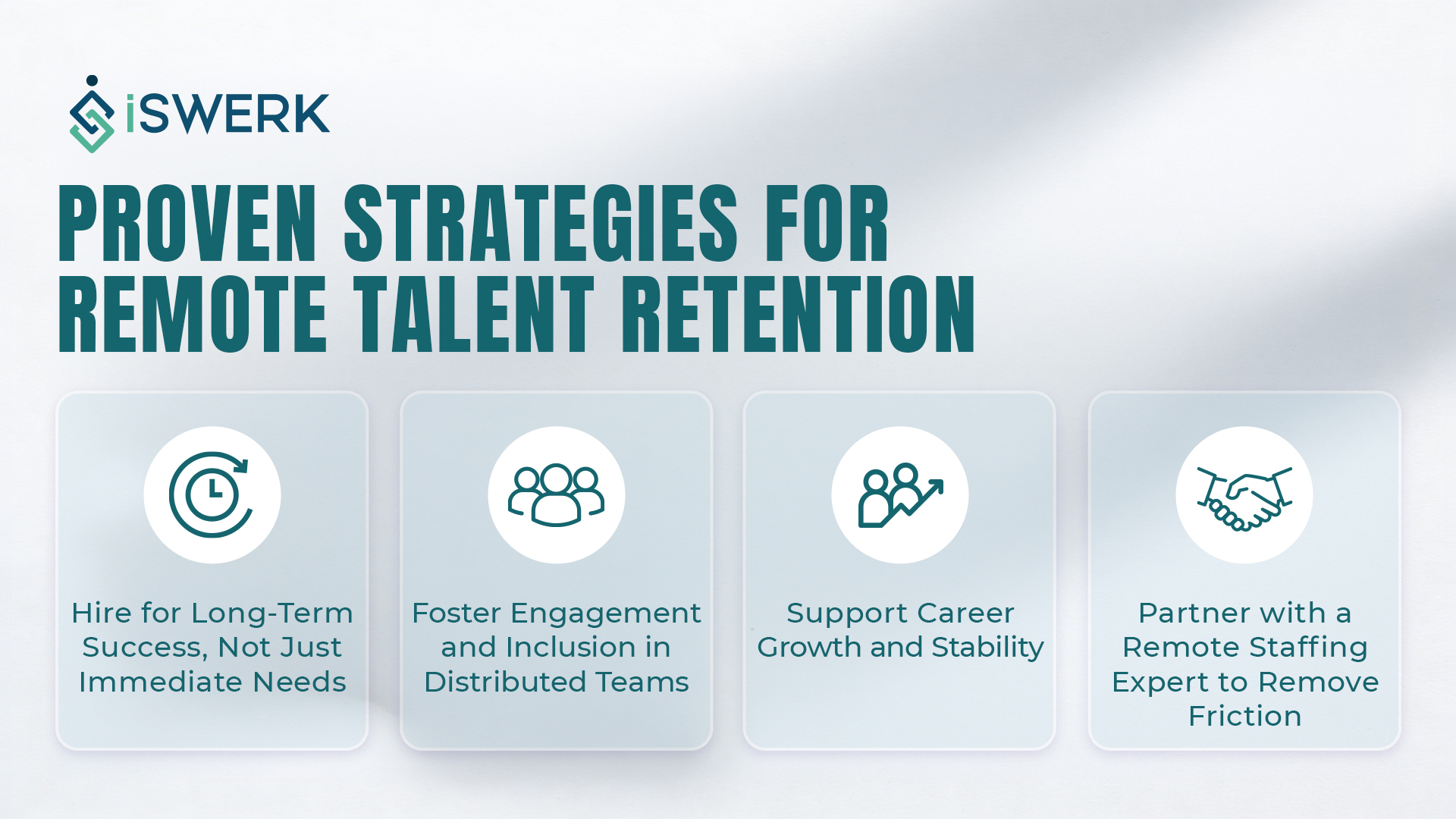
How a Remote Staffing Partner Supports Retention
Retaining remote talent takes more than good intentions. It requires structure, consistency, and ongoing support—areas where many growing teams struggle as priorities shift and workloads increase.
A remote staffing partner like iSWerk helps companies go beyond hiring by supporting the full employee lifecycle. This includes ongoing people support, proactive engagement, and helping resolve challenges before they impact performance or morale.
When issues surface, they are addressed quickly. Performance concerns, misalignment, or engagement gaps are handled before they turn into turnover. This early intervention helps teams stay stable and productive.
For business leaders, this support removes friction. Less time is spent on administrative work and people management challenges. More time goes into strategy, execution, and growth. For remote employees, it creates consistency.
Over time, this approach leads to stronger employee retention and a more reliable remote workforce.
Retention Is the Real Advantage of Remote Staffing
Remote work opens the door to incredible talent, but long-term success depends on what happens after the hire. Companies that prioritize retention build stronger teams, lower costs, and create a more stable foundation for growth.
Retaining remote talent long-term requires intention, consistency, and a people-first mindset. When remote employees feel supported, included, and invested in, they don’t just stay; they grow with your business.
And with the right remote staffing approach in place, building a stable, high-performing remote team becomes not just achievable, but sustainable.
If long-term retention is part of your remote strategy, iSWerk helps companies build remote teams designed for consistency, engagement, and growth. Let’s talk